How do you start planning a 3-seater sofa in a small living room?
Start with a tape measure, not the sofa. Measure the room, doors, and walking paths first, then decide the layout.
Most small living rooms feel cramped not because of the sofa size but because of poor planning. A typical 3-seater sofa is around 72-84 inches long, while a standard small living room often needs at least 30-36 inches of clear space in front for easy movement. That’s your starting framework.
In our Ahmedabad showroom, we always sketch the room on paper first door swings, window positions, and TV wall before suggesting any layout. For compact 1BHK-2BHK apartments (often 350–800 sq. ft overall), this step alone prevents later regret like blocked windows or tight walkways.
Quick planning checks:
- Note room length x width and ceiling height.
- Mark entry door and balcony door positions.
- Identify the “main wall” (often where the TV goes).
- Decide the primary activity: TV watching, hosting guests, or family lounging.
Should you place the 3-seater sofa against the wall?
Yes, in many narrow Ahmedabad living rooms, the wall is your best friend. But pull it 3–5 cm away for breathing room.
Placing a 3-seater against the longest wall is one of the simplest ways to instantly open the center of a small room. This works particularly well in long or rectangular spaces common in newer apartments. You free up the middle for a slim coffee table and circulation.
However, designers often recommend bringing the sofa slightly off the wall to avoid a “boxed-in” look and make the room feel more intentional. Even a few centimeters of gap visually lightens the piece.
When wall placement works best:
- Long, narrow rooms where floating furniture kills circulation.
- Homes with kids or elders who need a clear, obstacle‑free pathway.
- Rental flats where you don’t want to experiment too much.
In many Ahmedabad homes, we pair a wall-backed 3-seater with one lightweight accent chair that can be moved easily during gatherings instead of a bulky second sofa.
How much walking space should you leave around the sofa?
Aim for comfort, not “just fits.” Keep 75–90 cm in front and at least 40–45 cm around key paths.
Interior standards suggest maintaining roughly 30–36 inches (about 75-90 cm) between the front of the sofa and the TV wall or opposite furniture for comfortable movement. Between the sofa and a coffee table, 40-45 cm (about 16-18 inches) is commonly recommended so you can sit and reach it easily without hitting your knees.
In tight Ahmedabad living rooms, we often adjust this slightly but never compromise circulation in front of the sofa. If the room feels visually cluttered, we switch from a bulky coffee table to:
- A slim rectangular table
- A pair of nesting tables
- A bench-style coffee table that can double as extra seating
Clear circulation is especially important in homes with elders who may be sensitive to tripping hazards.
Is it better to float the sofa or keep it along the perimeter?
If you can float it without blocking paths, do it. It makes the room feel larger and more “designed.”
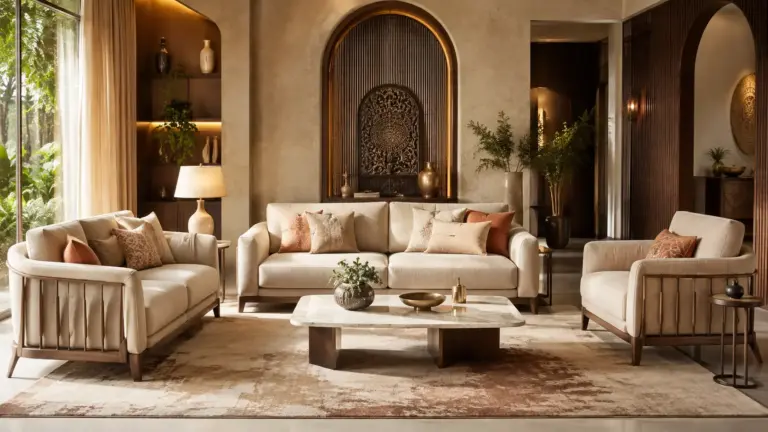
Floating the sofa (placing it away from walls) can create a more open, airy feel by allowing space to flow around the furniture. This is powerful in open-plan layouts where the living room merges with dining or kitchen areas. The back of the sofa itself becomes a subtle room divider.
However, not every Ahmedabad flat has the luxury of that much space. When the room width is limited, pushing the sofa against the longest wall is still perfectly valid. The trick is to avoid lining every single piece against the walls, that’s what makes the room feel like a waiting room.
Smart compromise layout:
- Sofa against long wall
- One floating accent chair angled near the opposite corner
- A rug anchoring the seating zone so it feels cohesive, not scattered
This gives you a mix of practical wall use and designer-style “float.”
How should you place a 3-seater sofa with a TV in a small room?
Prioritize viewing comfort and neck health. Center the sofa to the TV and maintain a balanced distance.
A standard sofa depth is usually around 90–100 cm, and many small rooms still allow 180–250 cm between the sofa and TV wall. That’s well within comfortable viewing distance for typical 43-55 inch TVs commonly used in apartments. The key is aligning the sofa with the TV and avoiding extreme side angles.
In our Ahmedabad projects, we often suggest:
- Keeping the TV slightly lower than eye level when seated (to reduce neck strain).
- Avoiding placing the TV on the same wall as the main window to reduce glare.
- Using a sleek TV unit rather than deep cabinets to save floor depth.
If the room is very shallow, you can wall-mount the TV and skip bulky media units altogether, using shelves or low‑profile storage instead.
What sofa style works best for small Ahmedabad living rooms?
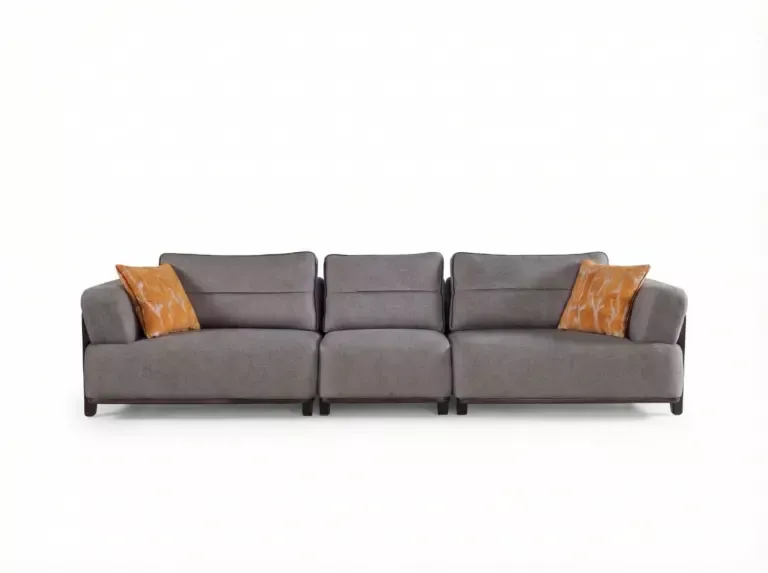
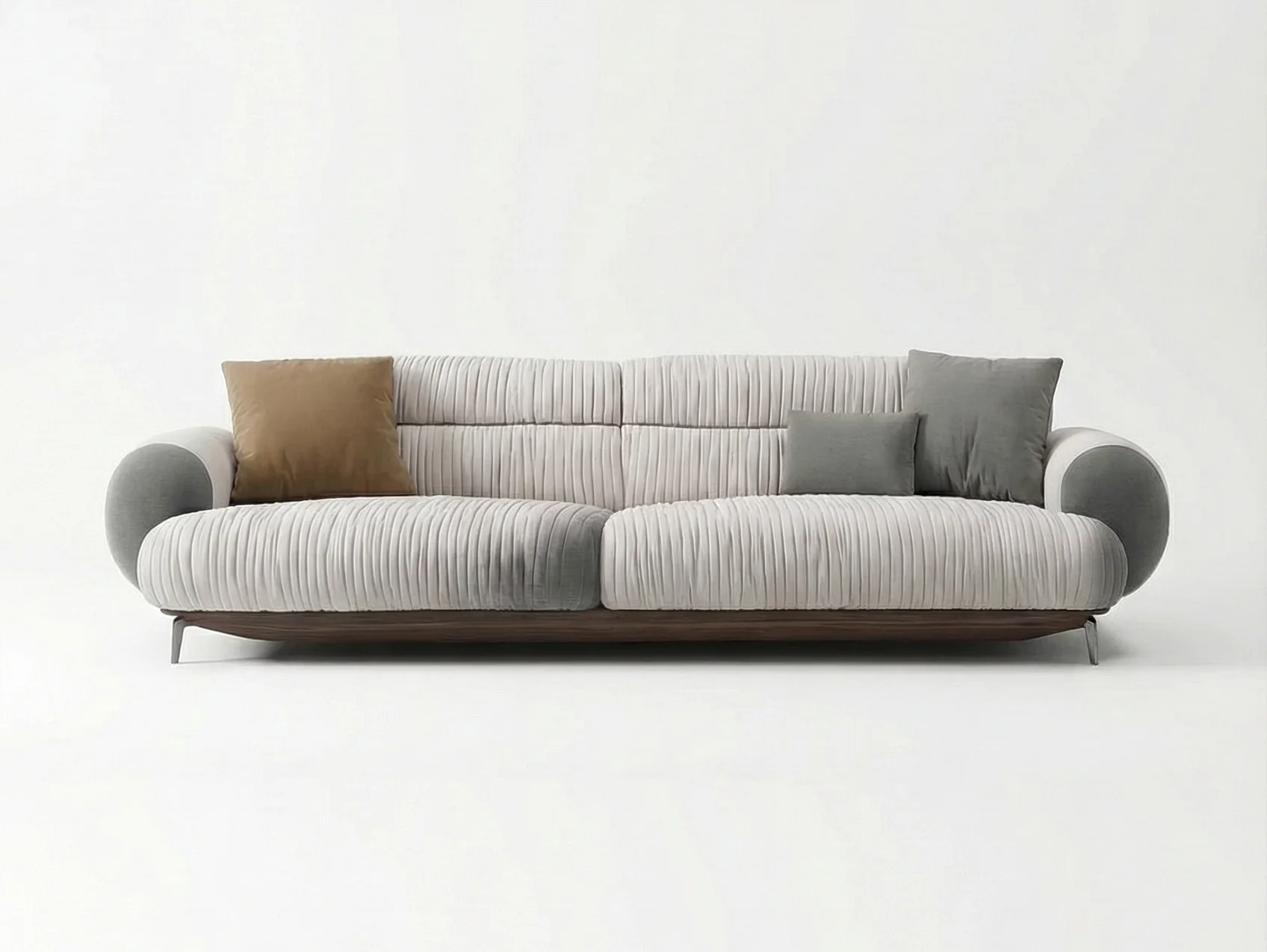
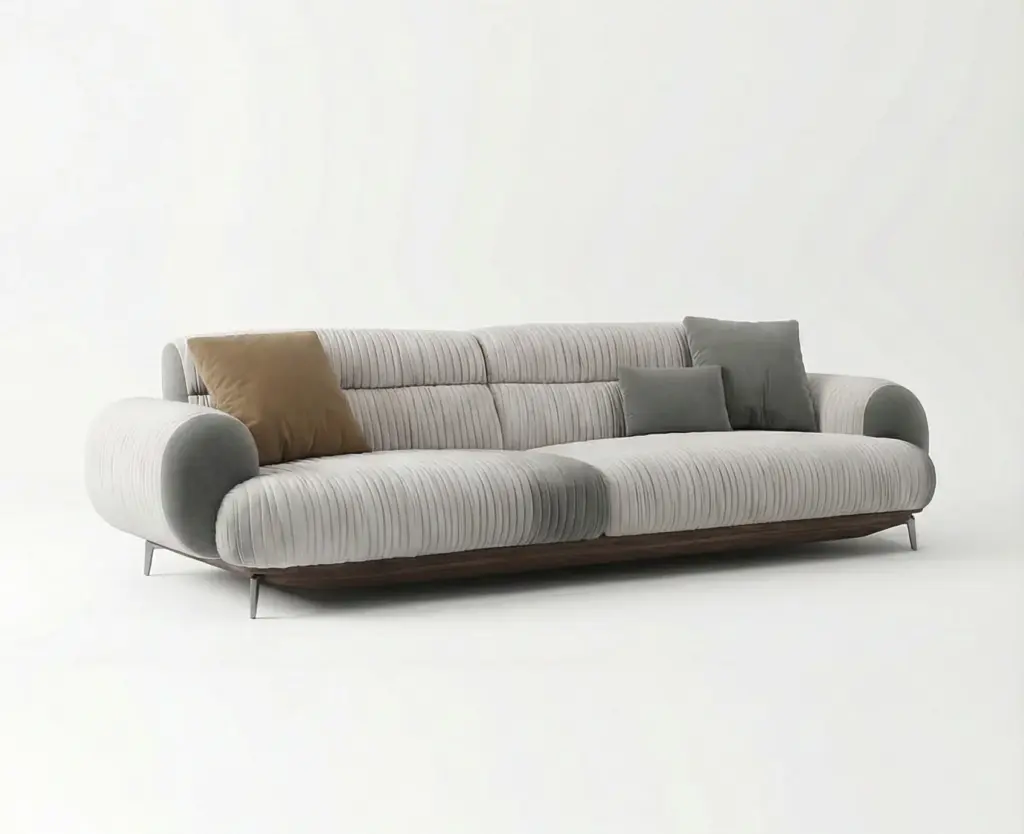
Choose visually light, raised sofas. Avoid bulky armrests and heavy skirting.
Raised 3-seater sofas with exposed legs allow more floor visibility, which makes small rooms feel larger. Slim arms, compact depth, and simple silhouettes prevent visual crowding. Overstuffed arms can easily eat up 15-20 cm on each side.
From a climate point of view, Ahmedabad’s heat makes breathable fabric upholstery more comfortable than thick leatherette. Dark fabrics may hide stains but can make a small room feel visually heavy, so we often recommend:
- Medium neutrals (beige, light grey, soft taupe) as a base
- Color through cushions, throws, and a rug
- High‑performance, easy‑clean fabrics to handle dust and daily use
For rental apartments with serious dust exposure, we advise removable, washable slipcovers that can be deep cleaned regularly instead of fixed upholstery.
How do you optimize a 3-seater layout in an open-plan living-dining?
Use the 3-seater as a subtle divider. Let its back define the living zone.
In open-plan apartments, placing the 3-seater perpendicular to the wall can create a natural boundary between the living and dining areas. The back of the sofa visually marks where the living space ends without needing a bulky partition.
In many Ahmedabad 2BHKs, the entry opens straight into a shared living-dining space. Here, we often:
- Place the 3-seater facing the TV wall, with its back towards the dining area.
- Use a narrow console table behind the sofa for keys and mail if space allows.
- Keep dining chairs light enough to shift during gatherings.
This layout keeps movement clear from main door to balcony while zoning the space smartly.
How can you style a 3-seater so a small room doesn’t look cluttered?
Keep the base calm. Layer interest with small, changeable elements.
The sofa is a large visual anchor. In small spaces, using a neutral or mid-tone solid fabric helps walls and floors feel more continuous, making the room appear larger. You can then bring personality with cushions, artwork, and texture.
Practical styling tips we use with Livoraa’s clients:
- 3–5 cushions of varying sizes instead of a large pile
- One throw or blanket draped casually for softness
- A rug that extends beyond the sides of the sofa to visually enlarge the zone
- Slim side tables instead of large, heavy end tables
In Ahmedabad, we also remind clients to choose fabrics that can handle frequent dusting-tight weaves and easy‑clean finishes reduce visible lint and dust buildup.
Ready to rethink your 3-seater layout?
A well-placed 3-seater can make even a small Ahmedabad living room feel open, welcoming, and comfortable. The magic isn’t in buying the biggest or fanciest sofa—it’s in measuring smartly, respecting walking space, and choosing the right style for our hot, dusty climate.
At Livoraa Furnishing, we don’t just help you pick a sofa. We sit with your floor plan, understand your family’s routine, and suggest layouts and fabrics that actually work in real Ahmedabad homes.
If you’d like help planning your own living room, visit our showroom in Ahmedabad or explore our sofa collections.
FAQs about arranging a 3-seater in a small living room
- What is the ideal size of a 3-seater for a small room?
Aim for around 72–84 inches (183–213 cm) in length and a compact depth, but always measure your room and leave at least 75–90 cm of circulation in front. - Can I put my 3-seater in front of a window?
Yes, as long as the back height doesn’t block too much light and there is enough space to open windows or curtains comfortably. In very hot Ahmedabad summers, consider UV-protective sheers or blinds behind the sofa. - Is it okay to push the sofa fully against the wall?
It’s acceptable in very small rooms, but if you have even a little extra space, pulling it a few centimeters away from the wall makes the room feel less cramped. - How do I arrange a 3-seater with other seating in a tiny room?
Pair it with one or two light accent chairs or stools instead of another bulky sofa. Arrange them in an “L” or gentle “U” shape facing the TV or coffee table to keep conversation easy. - What if my door opens directly into the living room?
Keep the entry path clear. Position the 3-seater along the opposite or side wall and use a slim console or wall hooks near the door instead of bulky shoe cabinets. This is a very common challenge in compact Ahmedabad flats, and smart scaling of furniture usually solves it.